
Middle School Math with Mr. Starzynski
Whether your student loves math or finds it challenging, Mr. Starzynski's lessons invite them to experience mathematics through a Waldorf-centered approach.
Through artistic work, hands-on exploration, history, and meaningful problem-solving, students develop mathematical skills while discovering the beauty and relationships behind mathematics.
32 weeks of curriculum • Self-paced learning • 18 months of access
Our Grade 7 and Grade 8 math courses provide 32 weeks of rich, thoughtfully sequenced mathematics designed to strengthen mathematical skills, logical thinking, and a deeper appreciation for the beauty of mathematics.
Each course features Main Lesson blocks where students immerse themselves in a new topic for several weeks. Through historical context, artistic expression, hands-on exploration, and problem-solving, students engage their head, heart, and hands as they discover mathematical concepts.
The curriculum includes short video lessons and accompanying worksheets. During a typical unit, students work through one video lesson and worksheet at a time. During a Main Lesson block, they dive more deeply into the topic with one video lesson and four worksheets each week.
Students work through the 32-week curriculum at their own pace, with 18 months of access to complete the course.
What Makes Seasons of Seven Math Different?
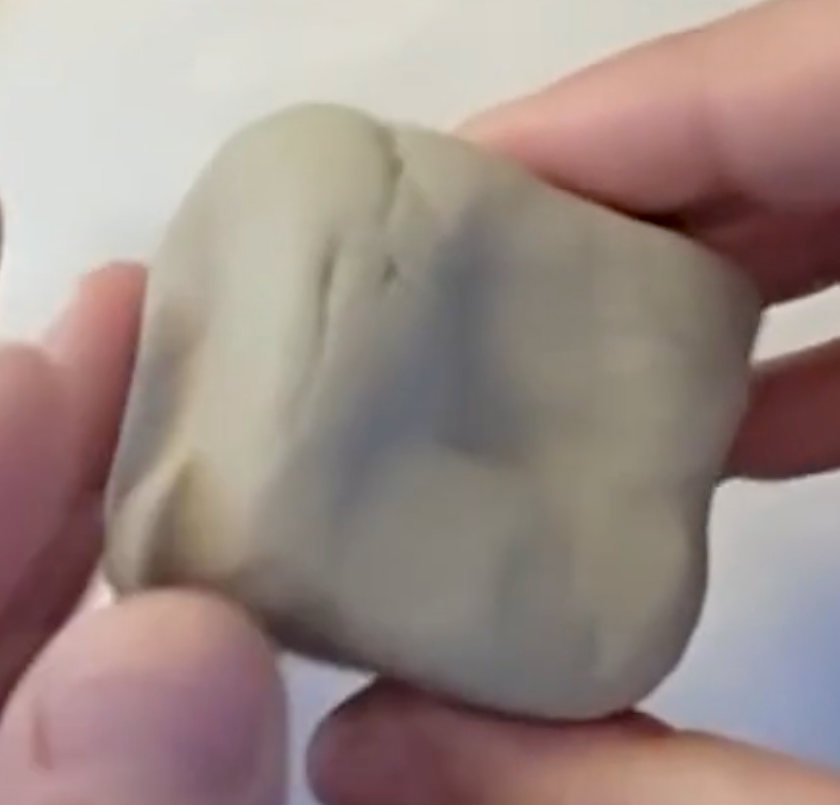
Head, Heart, and Hands
Every Main Lesson block weaves together history, artistic drawing, and hands-on problem-solving, so a new topic is never just memorized. It's experienced.
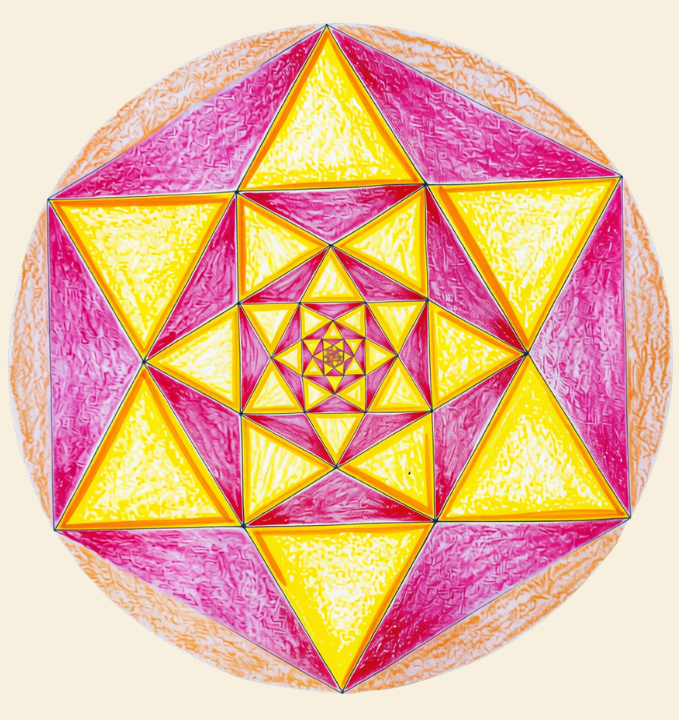
Built to Deepen, Year After Year
Concepts are introduced concretely, then revisited and deepened the following year. Grade 7 geometry and algebra lay the foundation that Grade 8 builds upon.
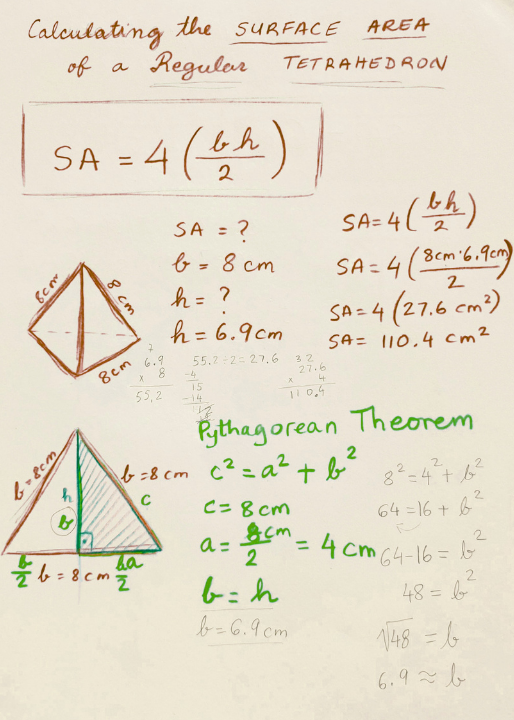
Compass, Straightedge, and Discovery
Students construct geometric relationships by hand before ever seeing a formula, so the Pythagorean Theorem, the Golden Ratio, and the Platonic Solids are discovered, not just recited.
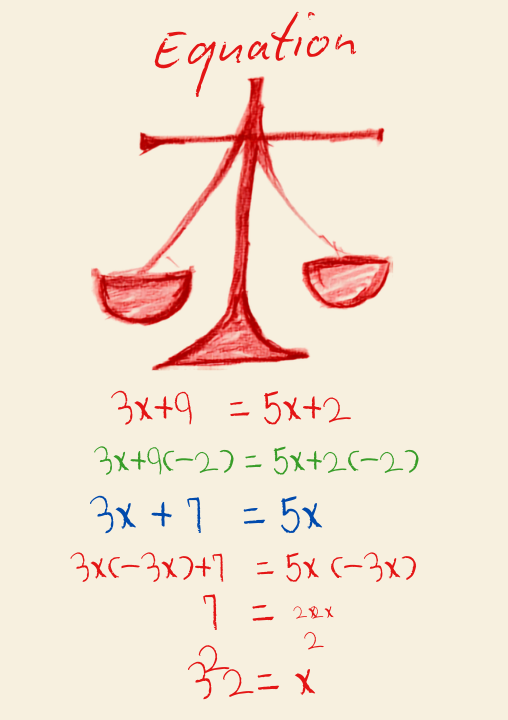
Taught by a Waldorf Math Specialist
Mr. Starzynski received a Waldorf education from kindergarten through 12th grade and trained under Jamie York and Douglas Gerwin. He also co-authored the high school Making Math Meaningful workbooks.
Grade 7 Math
A Strong Foundation in Mathematical Thinking
Grade 7 begins with a thorough review and deepening of arithmetic concepts, focusing on fractions and decimals. Students then move into a Geometry Main Lesson, where they explore constructions and dive deeply into theorems involving angles, areas, the Pythagorean Theorem, and the Golden Ratio.
As the year continues, students explore measurement, ratios, percents, money, and algebra. They encounter negative numbers and equations from multiple perspectives, building both skill and understanding along the way.
Key areas of study include:
- Arithmetic Review: Deepening fluency with fractions and decimals.
- Geometry Main Lesson: Compass-and-straightedge constructions, angle and triangle theorems, the Golden Ratio, Fibonacci's sequence, and the Pythagorean Theorem.
- Measurement and Ratios: U.S. and metric systems of measurement and further work with ratios.
- Percents and Money: Mental math with percents and an introduction to compound interest.
- Algebra Main Lesson: Negative numbers, formulas (including Gauss' Sum), combining like terms, and solving equations.
- Geometry Skills: Deepening the theorems learned in the Geometry Main Lesson.
- Irrational Numbers: An introduction to irrational numbers such as π and √2.
- Algebra Skills: A review and extension of all algebra concepts learned during the year.
| Weeks | Unit Name |
|---|---|
| 1–4 | Solidifying Skills |
| 5–8 | Geometry Main Lesson |
| 9–12 | Measurement and Ratios |
| 13–16 | Percents and Money |
| 17–20 | Algebra Main Lesson |
| 21–24 | Geometry Skills |
| 25–28 | Irrational Numbers |
| 29–32 | Algebra Skills |
A Glimpse Inside Grade 7 Math
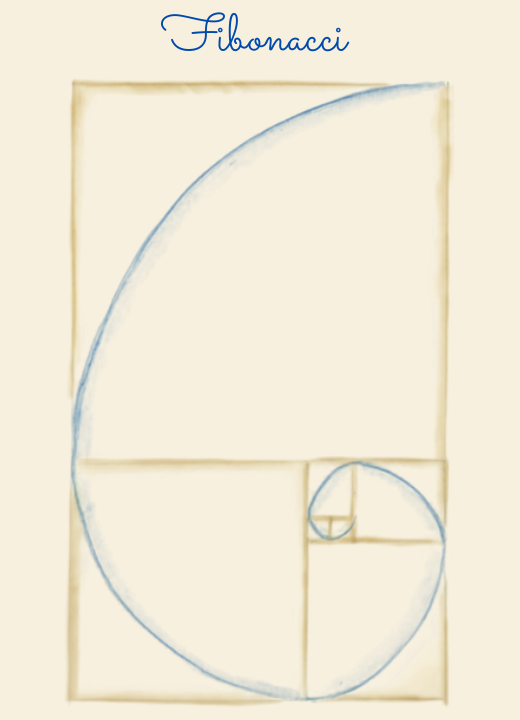
Fibonacci & the Golden Ratio
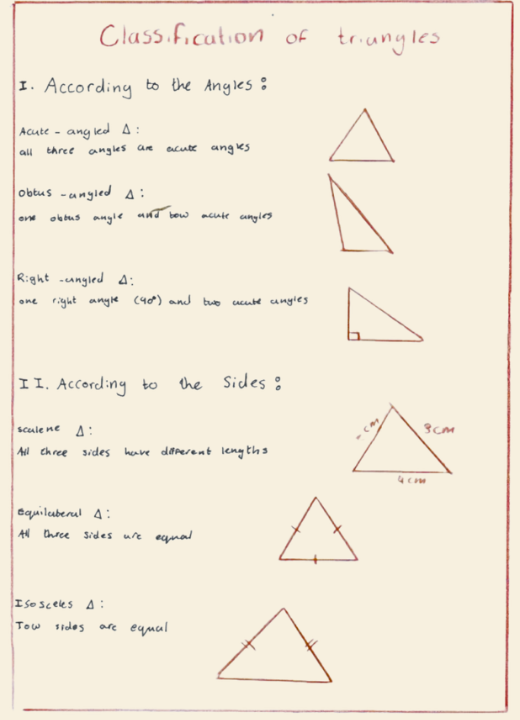
Classification of Triangles
Grade 8 Math
Deepening Skills and Preparing for High School
This course begins with a thorough review and deeper exploration of pre-algebra and basic algebra concepts, then dives into the Pythagorean Theorem, circles, and π. Along the way, calculators are introduced as tools to aid in problem-solving. The first Main Lesson explores the Platonic Solids with an introduction to 3D geometry, including surface area and volume. Students continue where they left off in Grade 7 with percents and money, develop the compound interest formula, and tackle more difficult algebra problems that prepare them for high school math and science. The second Main Lesson of the year explores number bases and computer science, helping students understand how we count and how computers work. The year ends with more difficult 3D geometry problems and a review of the year with a preview of high school math.
Key areas of study include:
- Algebra Review: Deepening pre-algebra and basic algebra concepts.
- Pythagorean Theorem, Circles, and Pi: Introduction of calculators as problem-solving tools.
- Platonic Solids and 3D Geometry Main Lesson: Surface area, volume, symmetry, faces, edges, and vertices of the five Platonic Solids.
- Percents and Money: Developing and applying the compound interest formula.
- Algebra Part II: More advanced algebra problems that prepare students for high school math and science.
- Number Bases and Computer Science Main Lesson: Base 4, 6, 12, 16, and binary; ASCII, computer memory, and how computers represent information.
- Volume and Surface Area: More difficult 3D geometry problems.
- Review and Preview: A review of the year's concepts and a preview of high school math.
| Weeks | Unit Name |
|---|---|
| 1–4 | Algebra Part I: Review |
| 5–8 | The Pythagorean Theorem, Circles, Pi |
| 9–12 | Platonic Solids and 3D Geometry Main Lesson |
| 13–16 | More on Percents and Money |
| 17–20 | Algebra Part II |
| 21–24 | Number Bases & Computer Science Main Lesson |
| 25–28 | Volume and Surface Area |
| 29–32 | Review and Preview |
A Glimpse Inside Grade 8 Math

Platonic Solids
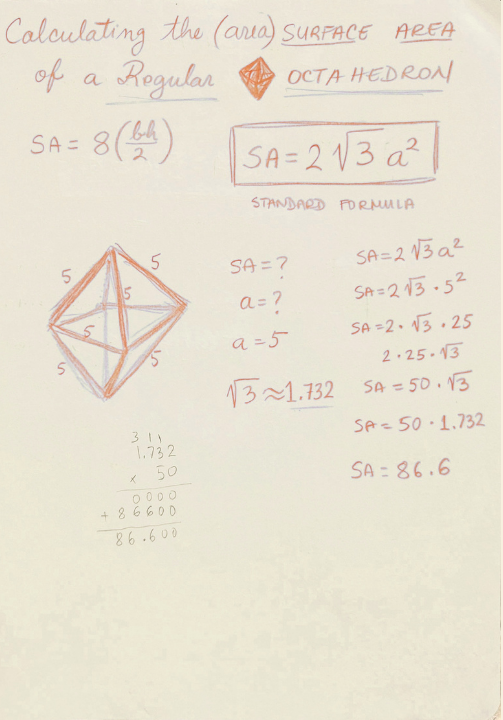
Surface Area Calculations

Meet Your Teacher
Mr. Starzynski
Andrew was born to two Waldorf teachers and raised in Chicago, Illinois. He attended the Chicago Waldorf School from kindergarten through 12th grade. After majoring in Mathematics and Philosophy and minoring in Computer Science for his undergraduate degree at Beloit College, Andrew went on to work in IT in Austin, Texas. He later earned a Master of Science in Applied Mathematics from the University of Houston, then returned to the Chicago Waldorf School to teach high school mathematics. During this time, Andrew completed his Waldorf High School teacher training at the Center for Anthroposophy under the tutelage of Douglas Gerwin and Jamie York. While in the training, Jamie asked Andrew to co-author the high school versions of the Making Math Meaningful math workbooks.
Prefer a Live Class Experience?
If your student would thrive in a live class with Mr. Starzynski, we also offer live classes through Seasons of Seven.
Email Us To Learn More